The fastest way to get better results from AI tools is to stop writing prompts and start writing briefs — directing the AI the way a good creative lead directs a talented junior who’s fast and capable but has zero context on your brand or goals. That means giving real context, a clear objective, specific constraints, references, and a defined output, then iterating on the result instead of expecting perfection on the first try. This guide breaks down the elements of an effective prompt brief and shows the difference between a vague request and a real direction.
Stop Treating AI Like a Vending Machine
Most people use AI tools like a vending machine: type a short request, expect a finished result, and feel disappointed when what comes out is generic, off-target, or bland. Then they conclude the tool isn’t very good. But the problem usually isn’t the tool — it’s the direction. A capable AI handed a vague, contextless prompt does exactly what a capable junior designer would do with the same vague brief: produce something technically competent and completely generic, because you didn’t tell them what you actually wanted.
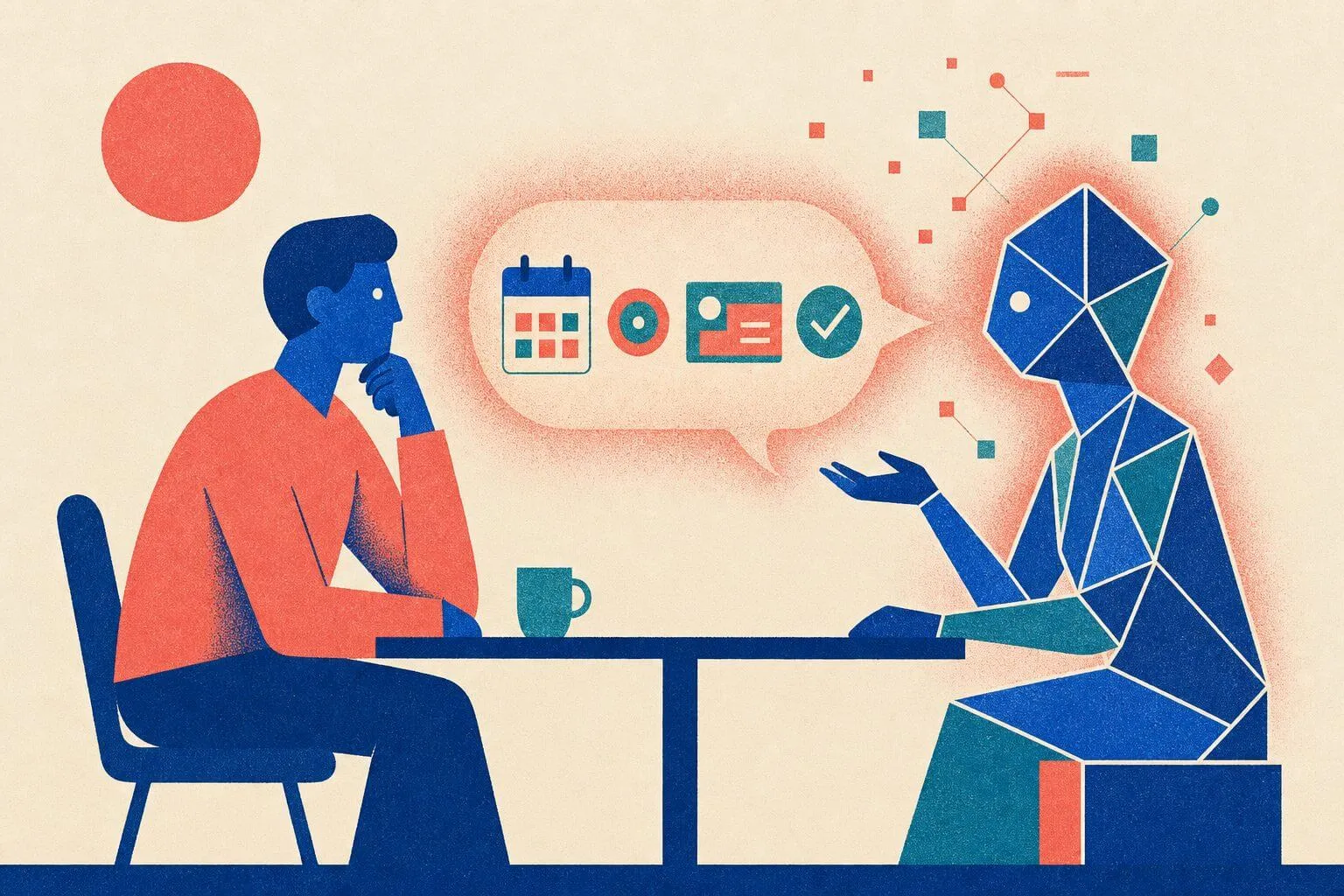
That analogy is the most useful mental model for working with these tools. Picture a talented junior designer on their first day: genuinely skilled, fast, knowledgeable about technique — and completely ignorant of your brand, your audience, your goals, your taste, and the specific problem you’re solving. You would never hand that person a three-word instruction and expect brilliance. You’d brief them. The same is true of AI, and the people getting extraordinary results aren’t using better tools; they’re giving better direction.
The thesis of this piece is that prompting is really briefing, and briefing is a core creative-leadership skill. The shift from “writing prompts” to “directing AI” is the difference between generic output and genuinely useful work. As these tools become standard in creative workflows, the ability to direct them well — to give the kind of clear, complete, iterative direction a good art director gives a junior — is becoming one of the most valuable skills a creative or marketer can have.
Why Most Prompts Fail
Before fixing it, it’s worth naming why the typical prompt produces disappointing results. The failures are consistent and all stem from treating the AI as a mind reader rather than a collaborator who needs a brief.
The most common failure is vagueness. “Write a blog intro about marketing” gives the AI almost nothing to work with, so it defaults to the safest, most generic possible output — the average of everything it’s seen on the topic. The second is missing context: the AI doesn’t know your brand, your audience, or your goal unless you tell it, so without that it produces something for a generic brand talking to a generic audience. The third is the absence of constraints — no specified tone, length, format, or things to avoid — which leaves the AI to guess, and it guesses toward the middle. And the fourth is the one-shot expectation: assuming the first output should be final, rather than treating it as a first draft to direct toward something better. Each of these is exactly the mistake a bad creative director makes with a junior, and it produces exactly the same disappointing results.
The Elements of a Prompt Brief
A good brief to a junior designer has recognizable components, and a good prompt has the same ones. Include these and the quality of what comes back transforms.
Context and role
Start by giving the AI the background a new team member would need: who the brand is, who the audience is, and what role you want the AI to play. Telling it to write “as an experienced financial advisor explaining to first-time investors” orients everything that follows. Context is the single biggest lever, because it moves the output from generic-for-everyone to specific-for-your-situation.
The actual objective
Be explicit about what you’re really trying to achieve, not just what you want produced. “I need an intro that makes skeptical readers feel this is worth their time” is a goal; “write an intro” is a task. The goal lets the AI make better choices in service of it, the same way a junior does better work when they understand the point rather than just the assignment.
Constraints and specifications
Give the boundaries: tone, length, format, structure, must-includes. Constraints don’t limit good AI output — they focus it. A junior who’s told “keep it under 150 words, conversational, no jargon, end with a question” produces something far more usable than one told “write something.” The more precisely you define the box, the better what comes back fits your actual need.
References and examples
This is the most underused and most powerful element. Showing examples of what you want — and what you don’t — communicates more than paragraphs of description. “Match the tone of this piece, not this one” or “in a style like these references” gives the AI a concrete target to triangulate from. It’s exactly how you’d show a junior designer work you admire to convey a direction words struggle to capture.
Output format
Specify what you want back and in what form — a list, a draft, three options to choose from, a structured layout. Telling the AI “give me three distinct directions, each with a different angle” produces something far more useful for an art director than a single take you then have to wholly accept or reject.
Vague Versus Briefed: A Concrete Contrast
The difference is easiest to feel with an example. Consider the vague version: “Write a product description for our coffee.” An AI will produce something serviceable and utterly forgettable, because it’s writing for a generic coffee brand selling to generic coffee drinkers.
Now the briefed version: “You’re writing for a small-batch roaster whose customers are curious home brewers who care about origin and craft but aren’t pretentious about it. Write a product description for a Guatemalan single-origin — warm and knowledgeable, like a friend who really knows coffee, not a sommelier showing off. Around 80 words. Lead with the flavor experience, mention the origin story briefly, avoid clichés like ‘rich and bold.’ Give me two options with slightly different personalities.” The second brief will produce dramatically better, more usable, more on-brand work — not because the AI got smarter between the two prompts, but because you finally directed it. That gap is entirely yours to close, and it’s the whole skill in one comparison. This is the practical core of treating AI as a design ally you direct rather than a machine you query.
Direct, Then Redirect: The Iteration Loop
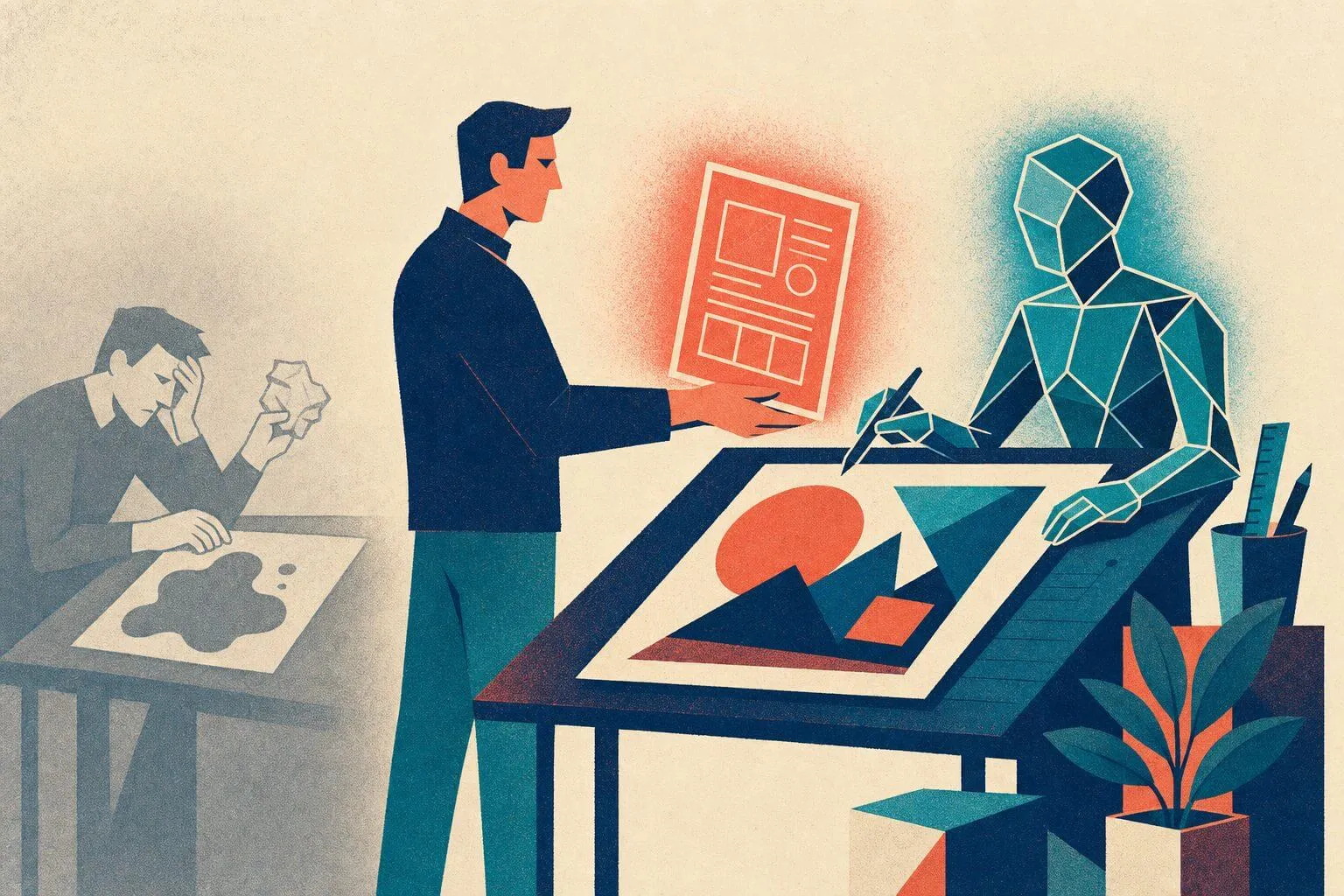
Even a great brief rarely produces perfection on the first pass, and expecting it to is the one-shot trap. The most important habit is treating the first output as a first draft and directing it toward what you want — exactly as you would with a junior designer’s initial attempt.
Good redirection is specific. “Make the second option warmer and cut the third sentence, it’s a cliché” moves things forward; “I don’t like it, try again” wastes the loop and usually produces something equally unaimed. The skill of giving precise, constructive feedback on creative work — knowing what’s not landing and articulating the fix — is the same whether the recipient is a person or a model. People who are good at art-directing humans tend to be good at directing AI for exactly this reason, and people who struggle to articulate what they want struggle with both. The iteration is where mediocre first drafts become genuinely good final work.
Bringing Your Brand Into the Brief
A generic brief produces generic output, which means the single best upgrade for branded work is feeding the AI your actual brand. This is where the prompt brief connects to brand consistency: if you’ve documented your brand voice with concrete examples and a list of words to avoid, you can put that directly into your briefs, and the AI can follow it.
This is also how you fight the drift toward sameness. Without brand context, AI produces work that sounds like everyone; with a sharp brand brief baked in, it produces work that sounds like you. The documentation that guides your human team — voice examples, do’s and don’ts, visual direction — is exactly what makes your AI direction specific and on-brand, which is why this ties so directly to a healthy brand management workflow and to strong copywriting standards. Your brand guidelines aren’t just for people anymore; they’re prompt material.
The Prompt Brief as a Reusable Asset
One more shift separates casual users from people getting real leverage: treating well-crafted briefs as reusable assets rather than one-time messages. When you develop a brief that reliably produces great results for a recurring task — your blog-intro brief, your product-description brief, your social-caption brief — that brief is itself valuable creative thinking worth saving and sharing.
Building a library of vetted briefs means your best direction gets reused instead of reinvented every time, and it lets a whole team produce on-brand, high-quality output by starting from proven direction rather than from a blank box. It’s the difference between every team member improvising prompts and everyone drawing on the organization’s accumulated knowledge of what works. The brief, in other words, becomes part of your brand infrastructure — encoded expertise that scales.
The Bottom Line
The quality of what you get out of AI is mostly determined by the quality of the direction you put in. The tools are capable; the bottleneck is briefing. Stop treating prompting as typing a request and start treating it as directing a talented junior who needs context, a clear objective, real constraints, useful references, and a feedback loop to do their best work.
Do that and two things happen: your output gets dramatically better and more on-brand, and you develop a skill — clear creative direction — that’s becoming central to how good work gets made. The people who thrive alongside AI won’t be the ones with secret prompt tricks; they’ll be the ones who can articulate exactly what they want and guide a capable collaborator to deliver it. That’s not a new skill, really. It’s the oldest one in creative leadership, pointed at a new kind of junior who happens to be a machine.
Frequently Asked Questions
Why do my AI prompts produce generic results?
Usually because the prompt is too vague and lacks context. A capable AI handed a short, contextless request defaults to the safest, most generic output — the average of everything it has seen. Add who the brand is, who the audience is, your actual goal, specific constraints, and examples, and the output becomes far more specific and useful. The tool isn’t the problem; the direction is.
What should a good AI prompt include?
Treat it like a brief to a new team member: context and the role you want the AI to play, the real objective behind the task, constraints like tone, length, and format, references or examples of what you want and don’t want, and a clear specification of what to deliver. These are the same components of any good creative brief, and including them transforms the quality of what comes back.
How is directing AI like managing a junior designer?
A talented junior is skilled and fast but has no knowledge of your brand, audience, goals, or taste until you brief them — and you’d never expect great work from a three-word instruction. AI is the same. You give context, a clear goal, constraints, and references, then review the first draft and give specific feedback to direct it toward the result you want.
Should I expect the first AI output to be final?
No — that’s a common mistake. Treat the first result as a first draft and redirect it with specific feedback, like “make this warmer” or “cut that cliché,” rather than accepting it as-is or vaguely saying “try again.” The iteration loop is where decent first attempts become genuinely good final work, exactly as it is when reviewing a person’s draft.
How do I get on-brand results from AI?
Feed your brand into the brief. If you’ve documented your brand voice with concrete examples and a list of words to avoid, include that directly in your prompts so the AI can follow it. This is the main way to counter AI’s drift toward generic output — with sharp brand context baked in, the work sounds like you instead of like everyone. Saving these briefs as reusable assets lets your whole team produce on-brand work consistently.